March 20, 2026 · 9 min read
"Stucco" is not one product. When you sit down with a sub to scope a commercial wall assembly, the first decision is almost always: three-coat hard-coat or one-coat fiber-reinforced? Here is what a PM needs to know to spec, schedule, and bid the right system.
Three-coat hard-coat (ASTM C926 / C1063)
The traditional system: paper, lath, scratch coat, brown coat, finish coat. Each cement coat is applied at roughly 3/8" and cured before the next goes on. Total thickness ~7/8". This is the gold standard for performance and longevity.
Pros
- 50+ year service life when detailed correctly
- Superior impact resistance and structural rigidity
- Forgiving of minor substrate movement
- Accepts virtually any finish, including hand-troweled and Santa Barbara
- Universally accepted by California building departments
Cons
- Longer schedule — each coat needs cure time
- Higher labor cost per square foot
- More weight on the framing (factor into structural design)
One-coat fiber-reinforced (ICC-ES approved systems)
A modern system from manufacturers like Quikrete, Senergy, Sto, and BMI Products. A single fiber-reinforced cement coat at ~3/8" is applied over lath, then a finish coat. The "one" refers to the base coat — there is still a finish layer over it.
Pros
- Faster schedule — typically 30–40% time savings on the wall
- Lower labor cost per square foot
- Lighter system weight
- Continuous insulation often integrated (foam under lath)
Cons
- System-specific — you are buying a proprietary assembly, training matters
- Less impact resistant than full three-coat
- Some California jurisdictions require specific ICC-ES approvals — verify with AHJ before bidding
- Crack repair behavior different from three-coat — your maintenance plan should reflect it
Where each system fits
| Building type | Typical pick |
|---|---|
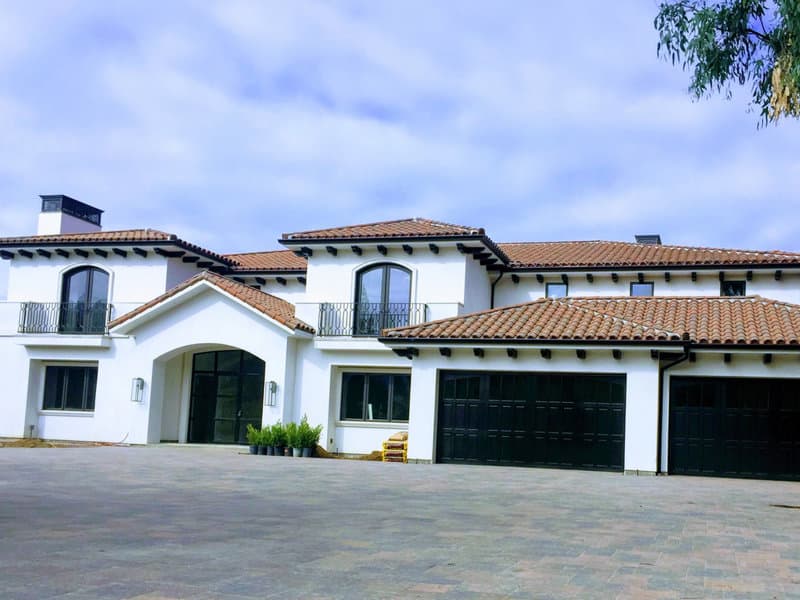
| Custom luxury home, hand-troweled finish | Three-coat |
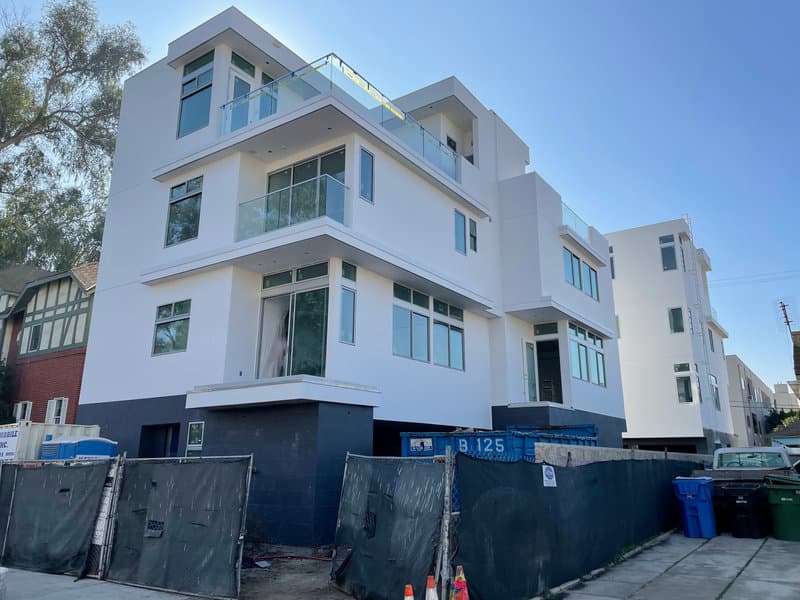
| Multi-family wood-frame podium, schedule-driven | One-coat |
| Concrete tilt-up with plaster veneer | Three-coat (over self-furring lath) |
| Retail / tenant improvement on metal stud | Either, schedule-dependent |
| Historic remodel, matching existing | Three-coat |
| Hotel exterior, large repetitive elevations | One-coat or EIFS |
Bidding implications
If your spec is open, ask both systems be bid as alternates. The cost delta is usually $2–$4 per square foot of wall in favor of one-coat. The schedule delta is bigger — 1–3 weeks per crew on a typical mid-rise. Decide which is more valuable on your project before you commit.
Detailing matters more than the system
The single biggest predictor of stucco performance is not which system you specified — it is how the openings, control joints, kickout flashings, and roof-to-wall transitions are detailed. We have torn off premium three-coat assemblies that failed in five years because of a missing kickout, and we have re-coated 30-year one-coat walls in great shape because someone flashed them correctly.
A note on EIFS
If you are weighing EIFS (Exterior Insulation and Finish System) vs hard-coat stucco, that is a different conversation. EIFS gives you continuous insulation and a synthetic finish, but it lives or dies on water management detailing — the spec needs to be drainage EIFS, not the older barrier systems. Happy to walk you through it on a real project.
Talk to a stucco sub before you finalize the spec
The best time to get a stucco sub involved is during design development, not after permit. A 30-minute call with a sub who has built 500+ Los Angeles walls can save you tens of thousands of change orders. Reach us at (818) 888-8554 or via the general contractor page.